Insight: Deep Geothermal Power Generation in the United Kingdom
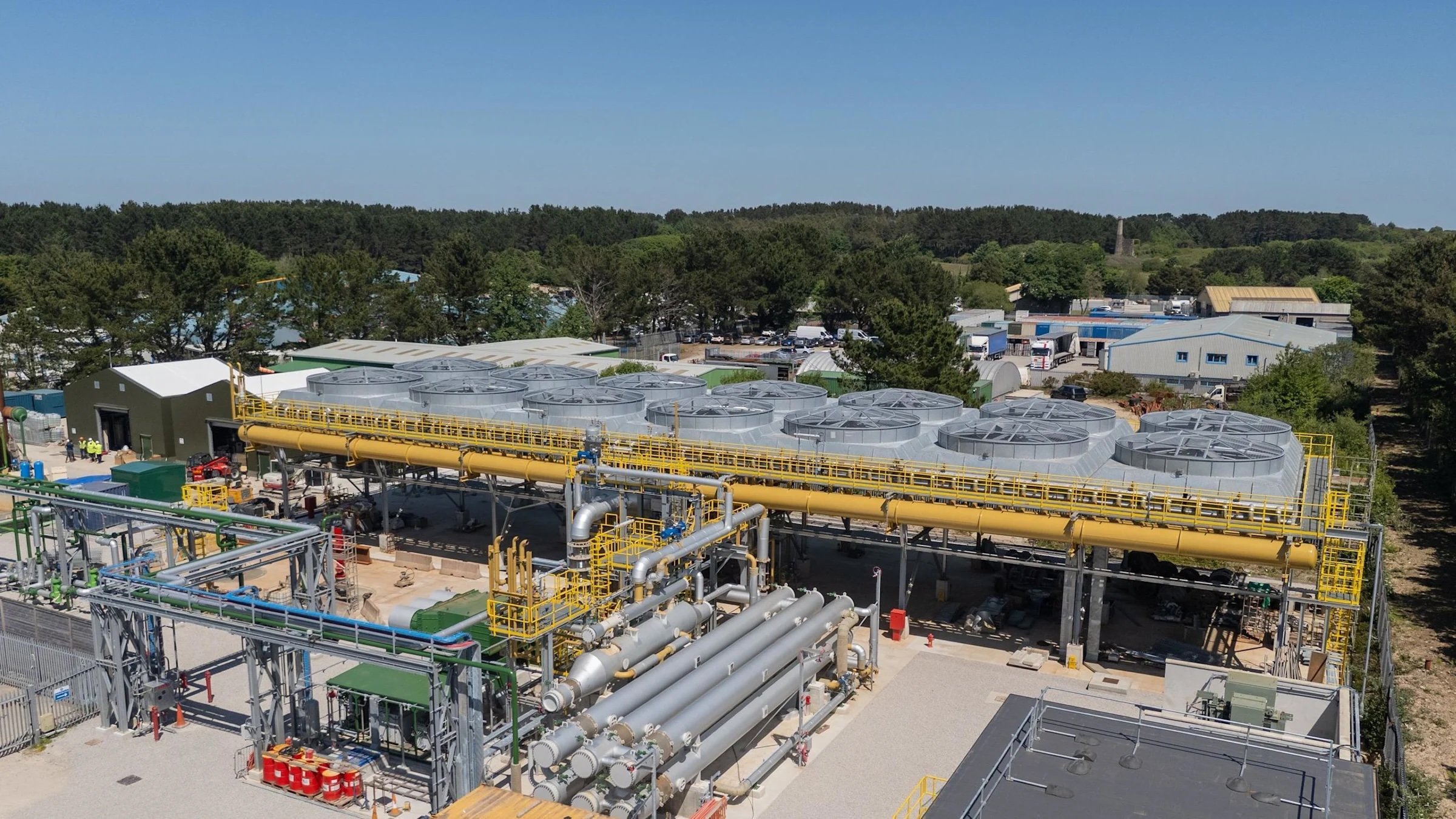
On 26 February 2026, the United Kingdom's first geothermal power plant commenced operations at United Downs near Redruth, Cornwall. Developed by Geothermal Engineering Ltd (GEL) over nearly two decades, the plant generates 3 MW of baseload renewable electricity- enough to power approximately 10,000 homes - and simultaneously produces the UK's first commercial supply of zero-carbon lithium carbonate. This milestone validates the long-held potential of deep geothermal energy in Cornwall and opens a new chapter for the UK's renewable energy mix.
The United Downs Deep Geothermal Power Project
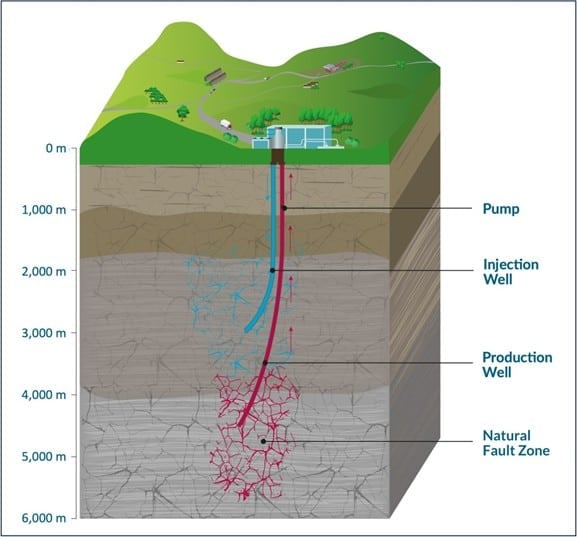
Located on the United Downs industrial estate near Redruth, the project is owned and operated by Geothermal Engineering Ltd (GEL), a private UK company founded in 2008. The concept was initiated in 2009, finance was secured over the following years, and two deep directional wells were drilled into a natural fault zone in the underlying granite between November 2018 and June 2019. The production well reaches a depth of 5,275 m – the deepest onshore well in the UK – while the injection well extends to 2,393 m.
Naturally hot water from the production well is pumped to the surface, where a heat exchanger extracts the heat to make steam to drive a turbine, generating electricity. Cool water is then pumped back into the injection well in a closed-loop system. The power plant was designed and supplied by Exergy International, using an Organic Rankine Cycle (ORC) binary system with a radial outflow turbine.
Exhibit 1: Schematic of the United Downs geothermal system (source: GEL)
From Construction to Commissioning
Construction of the power plant took place throughout 2024, with local contractors engaged wherever possible. GEL initially expected the plant to begin producing electricity by late 2024, but the project encountered several delays. Negotiations with the grid operator took longer than anticipated, and, critically, the electrical submersible pump (ESP) – a vital component of the system – broke down and required replacement during 2025. The target for first energy production was subsequently pushed to early 2026.
On 26 February 2026, the plant finally went live, generating geothermal electricity 24/7. The electricity has been contracted to Octopus Energy, which distributes it through the National Grid.
Project Costs and Funding
The total project cost has reached approximately £50 million, funded by a combination of private investors and the European Union. Key funding sources have included the European Regional Development Fund, Cornwall Council, and Thrive Renewables. GEL was awarded the first-ever Contracts for Difference (CfD) for geothermal energy in September 2023, under the UK Government’s Allocations Round 5 (AR5) subsidy mechanism. The CfD covers three Cornish projects: United Downs, plus planned projects at Manhay and Penhallow (each with an electrical capacity of around 5 MW).
Lithium: A Valuable Co-Product
An additional and commercially significant feature of the United Downs project is the presence of lithium in the geothermal fluids. The Gwennap mines were known as a source of lithium as long ago as the 1860s, and recent tests have shown concentrations of 340 parts per million in the geothermal brines, which is among the highest in Europe.
From February 2026, GEL is producing up to 100 tonnes of zero-carbon lithium carbonate annually, making United Downs the UK’s first commercial source of this critical mineral. This initial output is sufficient for the batteries of approximately 1,400 electric vehicles per year. GEL has plans to scale lithium production significantly, with a target of up to 18,000 tonnes per year.
Dr Alan Whitehead, Minister of State for Energy Security and Net Zero, stated: “With zero-carbon lithium now being produced here in the UK, British businesses are leading the way in securing the materials needed to power the next generation of electric cars”. The demonstration lithium extraction plant was constructed during early 2025, with outcomes expected to feed into future scale-up. This dual revenue stream (electricity and lithium) substantially strengthens the project’s commercial viability.
Separately, Cornish Lithium is also advancing its Cross Lanes site near Truro, where enabling works began in February 2026. Cornish Lithium is targeting 10,000 tonnes of lithium per year across its portfolio, contributing to the Government’s Critical Minerals Strategy target of 50,000 tonnes by 2035.
How Geothermal Energy Works
Geothermal energy comes from the Earth’s natural heat; residual heat from the planet’s formation and from the radioactive decay of elements. Natural heat from the Earth has been used for centuries, from Roman baths to Victorian thermal spas. Volcanic regions, such as Iceland and New Zealand, have long-established geothermal plants.
The potential for deep geothermal energy in the UK comes from both granites and deep sedimentary basins. To be useful, the resource requires heat, fluids to move the heat, and a pathway for those fluids to travel to production wells for extraction to the surface.
The UK’s deep sedimentary basins can form hot aquifers, but temperatures are usually less than 100°C, making them more suited to heating. Temperatures deep within granites in Cornwall, the North of England, Scotland, and Northern Ireland can reach 200°C or more – sufficient to generate electricity. To function as a geothermal resource, granite rocks require a network of natural or induced fractures.
Exhibit 2: UK hot rocks (Heat flow map from BGS UK Geothermal Platform)
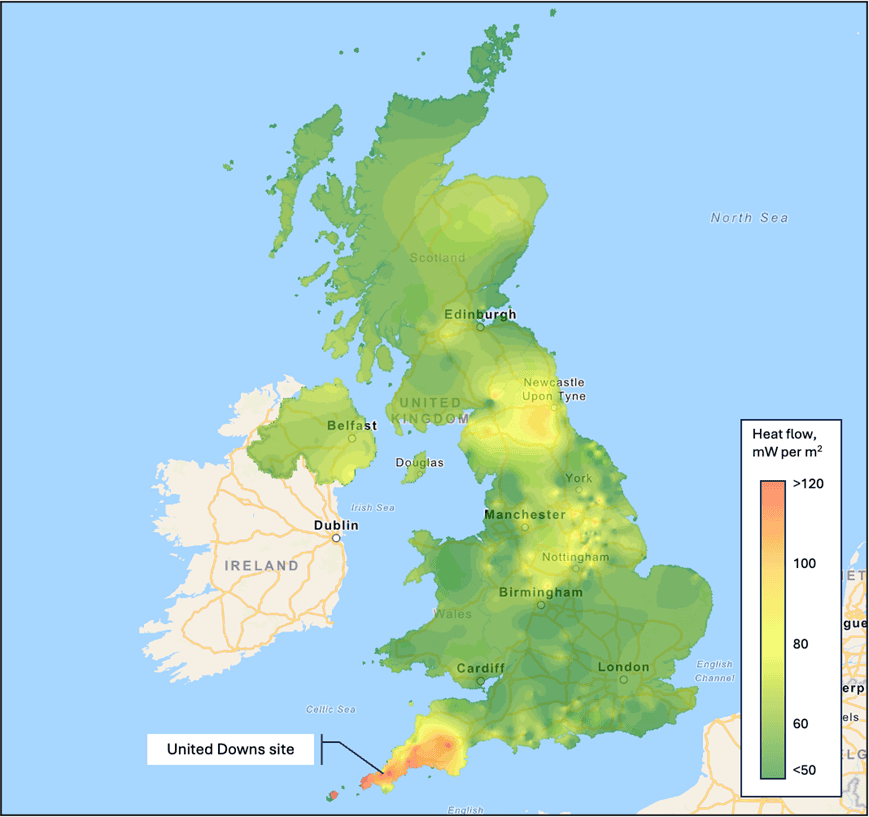
A key difference with the United Downs scheme is that, rather than seeking to create a fracture network (as attempted during the Hot Dry Rocks programme at Rosemanowes in the 1970s and 1980s), it exploits a natural fracture zone in the granite – the Porthtowan Fault Zone – that was already known to produce hot water in local mines.
GEL’s Broader Pipeline and Planning Challenges
Beyond United Downs, GEL holds planning consent for geothermal projects at two additional sites in Cornwall:
- Penhallow — pre-construction phase, approximately 5 MW electrical capacity
- Manhay — pre-construction phase, approximately 5 MW electrical capacity
A fourth proposed site at Tregath, near Camelford, was rejected by Cornwall Council in September 2025. The proposal faced strong opposition from local residents and parish councils over concerns about environmental risks to a protected tributary of the River Camel and insufficient community engagement. GEL had argued that the facility would create jobs and contribute approximately £2 million to the local economy, and that environmental impact assessments were unnecessary. The rejection highlights the planning and community engagement challenges that geothermal projects face, even when technical and regulatory assessments are favourable.
GEL’s ambition is to develop a portfolio of geothermal sites producing power and heat for approximately 70,000 homes in Cornwall by 2028.
UK Geothermal Potential: A Realistic Assessment
Can power generation from geothermal resources make a material contribution to the UK’s renewable energy system? The answer remains: probably not at a national level, but the resource is meaningful for specific locations and increasingly recognised for both heat and mineral extraction.
Theoretical calculations from the British Geological Survey (BGS) indicate a potential resource of just over 2 GW of electrical power generation. It is feasible to imagine 20-30 projects constructed over the next 20 years, totalling perhaps 150–300 MW of installed power generating capacity — useful, but not significant in the national context. The BGS has characterised the launch of United Downs as a “significant advancement” for geothermal energy, while cautioning that the high costs associated with deep drilling could hinder replication elsewhere.
In August 2025, the BGS launched the UK Geothermal Platform, a government-funded interactive tool providing national- to local-scale information on geothermal potential across both shallow and deep technology options. The platform allows regulators, developers, and researchers to assess the geothermal potential of specific areas. It highlights, for example, that closed-loop systems can technically be deployed almost anywhere in Great Britain, with up to 55% of the population potentially able to extract up to 15,000 kWh of thermal energy via a single 150 m-deep system.
The heat potential from deep geothermal and sedimentary basins could be more materially significant than electricity generation – and heat production in the United Kingdom remains a major source of carbon emissions. Geothermal energy’s key advantage over wind and solar is its baseload capability: it generates power continuously, 24/7, regardless of weather conditions.
Political and Strategic Context
The launch of United Downs has attracted significant political support. Chancellor of the Exchequer Rachel Reeves described the project as “a huge opportunity for Cornwall to unlock investment, drive economic growth, support jobs, and establish the region as a vital player in Britain’s energy security”. Ryan Law, CEO of GEL, emphasised geothermal’s pricing stability compared to gas and its baseload generation capability.
The project also aligns with broader UK-international clean energy partnerships. In February 2026, the UK and California signed a Memorandum of Understanding deepening cooperation on climate action, with Octopus Energy (which buys the United Downs’ electricity) committing nearly $1 billion to clean technology investments in California.
Conclusion
The United Downs project’s journey from concept in 2009 to live electricity generation in February 2026 demonstrates both the promise and the challenges of deep geothermal energy in the UK. Credit must be given to Ryan Law and the team at GEL for their tenacity in reaching this landmark stage – overcoming funding hurdles, drilling complexities, ESP failures, and grid connection delays over nearly two decades.
As the UK’s first operating deep geothermal power plant and its first domestic source of zero-carbon lithium, United Downs is now a proven concept rather than a theoretical one. The project’s success or failure in sustained operation will determine whether geothermal energy can attract the investment needed to develop the pipeline of sites in Cornwall and beyond. While deep geothermal will not transform the UK’s overall energy system, it offers a reliable, low-carbon source of both power and heat for regions with suitable geology – and the lithium co-product may ultimately prove to be its most strategically important contribution.
Photo credits:
Top picture: The United Downs power plant near Truro, Cornwall, is the first facility in the UK to generate electricity using the Earth’s natural heat. (source: Geothermal Engineering Ltd)
Sources
The case for deep geothermal energy — unlocking investment at scale in the UK (BGS / Arup; commissioned by the North East Local Enterprise Partnership, Jul 2023)
Evidence report supporting the deep geothermal energy white paper (BGS, Jul 2023)
United Downs Deep Geothermal Power Project (Geothermal Engineering Ltd website)
Deep Geothermal Energy: Economic Decarbonisation Opportunities for the United Kingdom (ARUP, commissioned by REA, May 2021)
Assessment of the resource base for engineered geothermal systems in Great Britain (Busby and Terrington, 2017; Geotherm Energy 5, 7)
BBC News: Earth’s heat to produce electricity for homes in UK clean energy first (BBC, 26 Feb 2026)
Geothermal electricity and zero-carbon lithium production launch in Cornwall (Rayo, 26 Feb 2026)
The United Downs Geothermal Power Plant, Cornwall, UK (Olver and Law, Stanford Geothermal Workshop 2025)
UK Geothermal Platform (British Geological Survey, Aug 2025)
Council blocks geothermal power plant (BBC, 25 Sep 2025)
Related Articles
Flash Note: What AR7 Tells Us About the Future of UK Energy
Hamburg Declaration: A Clean Energy Security Pact Reshaping the North Sea

FLASH NOTE: U.S. House of Representative’s Permitting Reform Bill: How the SPEED Act Helps–and Hurts–Project Certainty

Denmark’s Offshore Wind Market: Lessons, Reforms and New Momentum